This guide covers the United States.
On this page
- What does Original Medicare cover in the home?
- Does Medicare pay for grab bars, shower seats or raised toilet seats?
- Does Medicare pay for a stair lift or a wheelchair ramp?
- Which lifts does Original Medicare cover?
- Do Medicare Advantage plans cover home modifications?
- How do Original Medicare and Medicare Advantage compare?
- Who else pays for home modifications?
- What should a patient hear at discharge?
- Common questions
- Sources
Original Medicare pays for equipment, not changes to the house: Part B covers durable medical equipment (DME) that is medically necessary and used in the home, and the CMS National Coverage Determinations Manual (Section 280.1) lists grab bars, bathtub seats, raised toilet seats and stairway elevators as items to deny. Medicare Advantage plans are different. CMS lets them offer bathroom safety devices as a supplemental benefit, and since contract year 2020 it has let them offer structural home modifications, such as "permanent mobility ramps," to chronically ill enrollees who qualify.
What does Original Medicare cover in the home?
Original Medicare covers durable medical equipment under Part B. Medicare.gov describes DME as equipment that is durable, "used for a medical reason," "typically only useful to someone who is sick or injured," used in the home and "expected to last at least 3 years." The regulation behind that definition, 42 CFR 414.202, adds that the equipment must be "primarily and customarily used to serve a medical purpose" and "generally is not useful to an individual in the absence of an illness or injury."
Under 42 CFR 410.38(a), Part B pays for DME "if the equipment is used in the patient's home or in an institution that is used as a home." A hospital or skilled nursing facility cannot count as the home. Medicare's DME booklet says a doctor or other treating provider must prescribe the equipment by filling out an order, and that Medicare only covers DME bought from a supplier enrolled in Medicare.
The covered DME list on medicare.gov includes canes, commode chairs, crutches, hospital beds, walkers, and wheelchairs and scooters. The booklet adds "patient lifts to lift you from a bed or wheelchair." After the Part B deductible, the patient pays 20% of the Medicare-approved amount if the supplier accepts assignment. Medicare pays for most DME as a rental, and for items such as wheelchairs and hospital beds it rents for 13 months of continuous use, after which ownership passes to the patient.
Does Medicare pay for grab bars, shower seats or raised toilet seats?
No, not under Original Medicare. The DME reference list in Section 280.1 of the CMS National Coverage Determinations Manual lists:
- Grab bars: "Deny--self-help device; not primarily medical in nature"
- Bathtub seats: "Deny--comfort or convenience item; hygienic equipment; not primarily medical in nature"
- Bathtub lifts: "Deny--convenience item; not primarily medical in nature"
- Raised toilet seats: "Deny--convenience item; hygienic equipment; not primarily medical in nature"
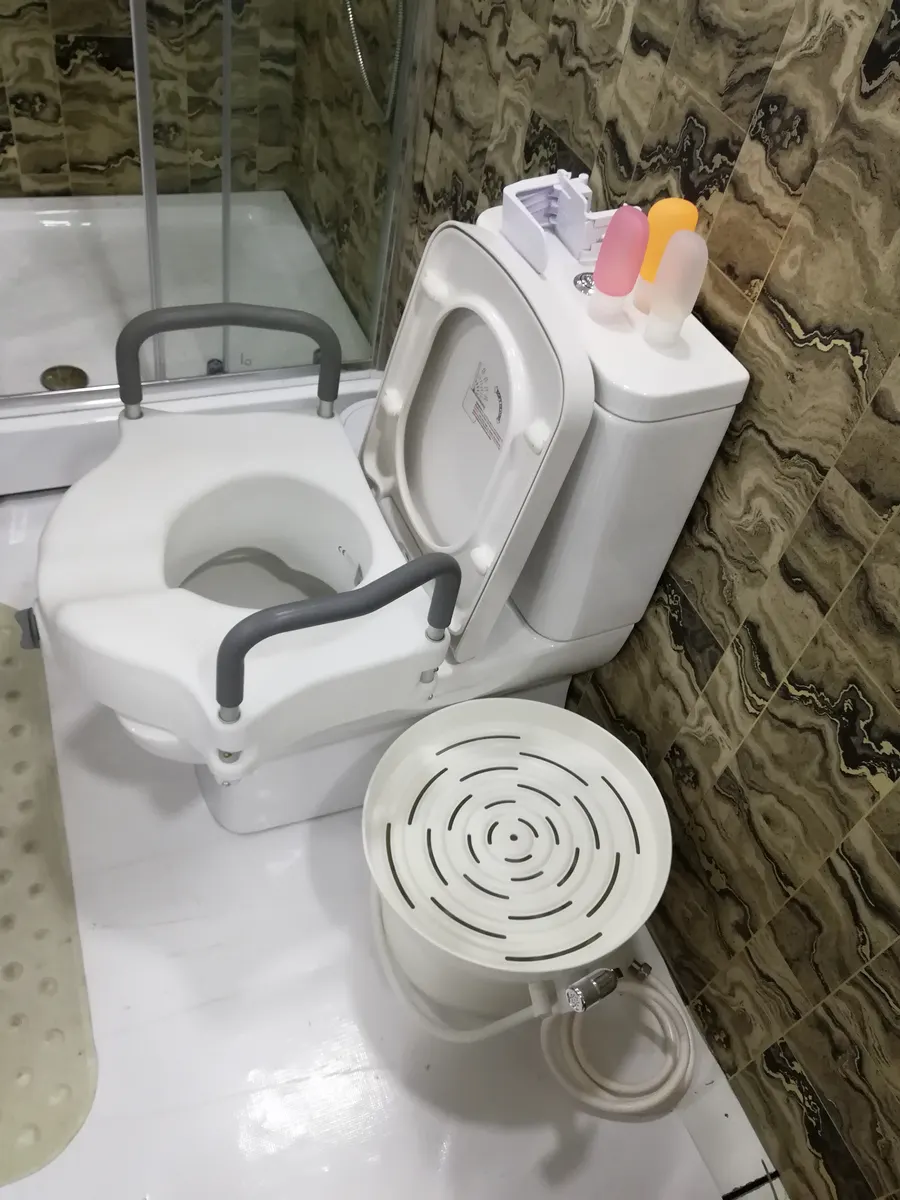

The Medicare Benefit Policy Manual, Chapter 15, Section 110.1, gives the reason. It treats "self-help devices (such as safety grab bars)" as "nonmedical in nature," and says equipment "used for environmental control or to enhance the environmental setting in which the beneficiary is placed" is not covered DME.
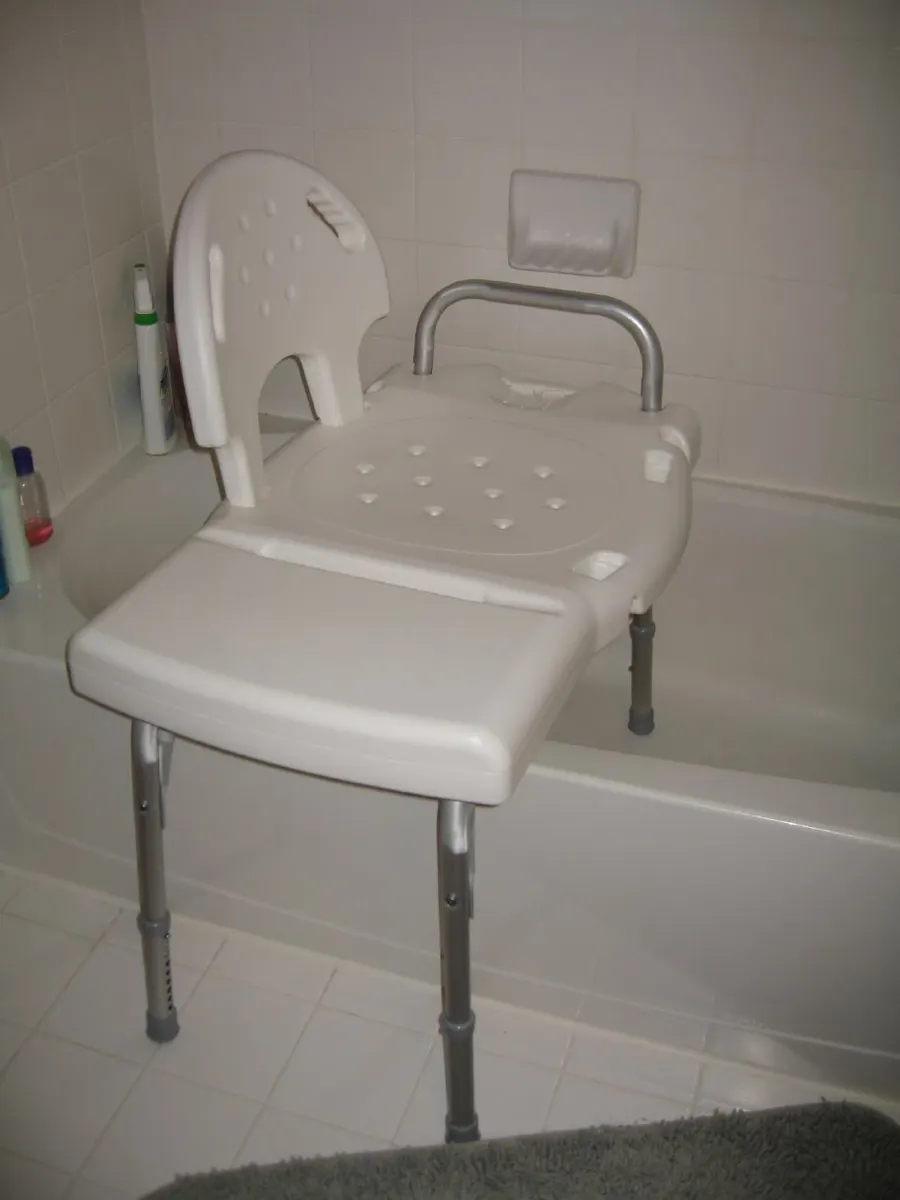

Medicare.gov has no coverage page for bathroom safety equipment. The bathroom item it does list as covered is the commode chair. Under Section 280.1, a commode is covered "if patient is confined to bed or room," and a patient whose condition confines them to one floor of the home with no bathroom on that floor can also qualify.
Does Medicare pay for a stair lift or a wheelchair ramp?
Original Medicare does not pay for a stair lift. Section 110.1 of the Benefit Policy Manual says equipment that "basically serves comfort or convenience functions or is primarily for the convenience of a person caring for the patient, such as elevators, stairway elevators, and posture chairs, do not constitute medical equipment." Section 280.1 of the NCD Manual lists elevators and stairway elevators as items to deny.
Neither medicare.gov nor the CMS manuals cited here list a wheelchair ramp as covered DME, and Section 280.1 has no entry for ramps. Any item paid as DME has to meet all five parts of the definition in 42 CFR 414.202. CMS has named "permanent mobility ramps" as an allowed Medicare Advantage benefit for chronically ill enrollees (see below). For a patient with Original Medicare, a ramp or stair lift has to be funded by the patient or by a program outside Medicare, such as those listed further down.
Which lifts does Original Medicare cover?
Original Medicare covers two kinds of lift as DME, each under conditions.
- Patient lifts. Section 280.1 covers a patient lift if the DME contractor's medical staff "determines patient's condition is such that periodic movement is necessary to effect improvement or to arrest/retard deterioration in condition." The Medicare DME booklet lists "patient lifts to lift you from a bed or wheelchair."
- Seat lifts. Section 280.4 of the NCD Manual covers a seat lift "when prescribed by a physician for a patient with severe arthritis of the hip or knee and patients with muscular dystrophy or other neuromuscular disease," where the evidence shows that "the alternative would be chair or bed confinement." Coverage is limited to lifts that "operate smoothly, can be controlled by the patient," and help the patient stand and sit "without other assistance." Spring-release lifts are excluded, and for a lift chair with a recliner, Medicare pays only the amount for the seat lift.
Do Medicare Advantage plans cover home modifications?
Some do. A Medicare Advantage plan must cover the same medically necessary categories of DME as Original Medicare, and it may also offer supplemental benefits that Original Medicare does not cover. Home safety items reach patients through three routes.
Bathroom safety devices. The Medicare Managed Care Manual, Chapter 4, Section 30.3, allows plans to offer "specific non-Medicare-covered safety devices to prevent injuries in the bathroom," including installation and an in-home bathroom safety inspection "conducted by a qualified health professional." It also describes an in-home safety assessment that "should be performed by an occupational therapist or other qualified health provider."
Primarily health related benefits. In April 2018, CMS reinterpreted "primarily health related" for supplemental benefits, starting with contract year 2019. A CMS memo of May 15, 2018, which builds on that reinterpretation, names "home and bathroom safety devices and modifications" as an example of such a benefit.
Special Supplemental Benefits for the Chronically Ill (SSBCI). The Bipartisan Budget Act of 2018 let plans offer chronically ill enrollees benefits that are not primarily health related. CMS's April 24, 2019 memo lists "Structural Home Modifications" as allowed where they have "a reasonable expectation of improving or maintaining the health or overall function of the chronically ill enrollee (e.g., widening of hallways or doorways, permanent mobility ramps, easy use doorknobs and faucets)."
The current rule is 42 CFR 422.102(f). A chronically ill enrollee must have one or more "comorbid and medically complex chronic conditions," a "high risk of hospitalization or other adverse health outcomes," and need "intensive care coordination." Plans must show that an enrollee meets all three, must post their objective eligibility criteria for each SSBCI on their public website, and may offer SSBCI only as a mandatory supplemental benefit. The contract year 2026 final rule added a list of benefits plans may not offer as SSBCI, such as alcohol, tobacco and life insurance. Home modifications are not on that list.
None of these rules requires a plan to offer home modifications. The Medicare & You 2027 handbook says these extra benefits "are generally limited" and that for benefits aimed at chronic illness, "you'll need to wait until you join the plan to find out if you qualify." The plan's Evidence of Coverage sets out what it covers and what the enrollee pays, and the handbook says plans send a notice or printed copy of it by October 15 each year.
How do Original Medicare and Medicare Advantage compare?
| Item | Original Medicare (Part B) | Medicare Advantage |
|---|---|---|
| Grab bars | Deny: "self-help device" (NCD 280.1) | May be a supplemental benefit (MMCM Ch. 4, 30.3) |
| Bathtub seats, raised toilet seats | Deny: "convenience item" (NCD 280.1) | May be a supplemental benefit |
| Commode chair | Covered if confined to bed or room (NCD 280.1) | Must cover, same DME categories as Original Medicare |
| Patient lift | Covered under conditions (NCD 280.1) | Must cover, same DME categories |
| Seat lift mechanism | Covered under conditions (NCD 280.4) | Must cover, same DME categories |
| Stair lift (stairway elevator) | Deny: "convenience item" (NCD 280.1, BPM 15, 110.1) | Not addressed by the CMS documents cited here; check the plan |
| Ramp, wider doorways | Not listed as DME | Allowed as SSBCI for eligible chronically ill enrollees (CMS memo, April 24, 2019) |
| Patient cost | 20% of the Medicare-approved amount after the Part B deductible | Set by the plan; see its Evidence of Coverage |
Who else pays for home modifications?
- Medicaid HCBS waivers. Under Section 1915(c), states run home and community-based services waivers and "can also propose 'other' types of services." Some waivers include home modifications. Michigan's MI Choice Waiver, for example, includes "environmental accessibility adaptations" (medicaid.gov waiver list).
- VA. The VA offers disability housing grants to veterans and service members with certain service-connected disabilities, to buy or change a home, which "might involve installing ramps or widening doorways." See VA home modification grants.
- USDA Section 504. In rural areas, very low-income homeowners can get Section 504 repair loans and grants. Grants are for applicants 62 or older and can pay to "remodel dwellings to make them accessible and useable for household members with disabilities" (7 CFR 3550.102 and 3550.103).
What should a patient hear at discharge?
Settle the funding route before the patient goes home: (the pre-discharge home visit checklist covers the home itself)
- Ask which Medicare the patient has. Original Medicare and Medicare Advantage pay for different things.
- Get a written order for covered DME. For items such as a commode, patient lift, hospital bed or walker, the treating practitioner must write the order, and the supplier must be enrolled in Medicare. Medicare.gov's supplier directory lists enrolled suppliers.
- Tell the patient which items Original Medicare will not pay for. Grab bars, bath seats, raised toilet seats and stair lifts will be private costs under Original Medicare unless another program pays.
- For a Medicare Advantage member, check the Evidence of Coverage. Look for bathroom safety devices, an in-home safety assessment or SSBCI home modifications, and call the plan to ask how eligibility is decided.
- Refer to other programs where the patient may qualify. That means the state Medicaid HCBS waiver, VA disability housing grants for veterans with qualifying service-connected disabilities, and USDA Section 504 for rural homeowners.
Common questions
Will Medicare pay for a wheelchair ramp?
Original Medicare does not list ramps as covered DME, and no medicare.gov coverage page covers them. A Medicare Advantage plan may pay for "permanent mobility ramps" as an SSBCI benefit for an enrollee who meets the chronically ill criteria in 42 CFR 422.102(f), if the plan offers that benefit.
Does Medicare cover a lift chair?
Original Medicare can cover the seat lift mechanism, not the chair. Under NCD 280.4, Medicare limits payment for a unit with a recliner "to the amount payable for a seat lift without this feature." The patient must meet the conditions in Section 280.4, and the claim goes to the DME contractor's medical staff.
Sources
- Medicare.gov. Durable medical equipment (DME) coverage and Commode chairs. Checked October 2026.
- Centers for Medicare & Medicaid Services. Medicare Coverage of Durable Medical Equipment & Other Devices, CMS Product No. 11045, February 2025, pages 2 to 3, 8 and 11.
- Centers for Medicare & Medicaid Services. Medicare & You 2027, pages 66 to 67.
- Electronic Code of Federal Regulations. 42 CFR 414.202 (definition of durable medical equipment), 42 CFR 410.38(a) and 42 CFR 422.102(f). Checked October 2026.
- Centers for Medicare & Medicaid Services. Medicare Benefit Policy Manual, Chapter 15, Sections 110 and 110.1 (Rev. 13889, issued July 30, 2026).
- Centers for Medicare & Medicaid Services. Medicare National Coverage Determinations Manual, Chapter 1, Part 4, Sections 280.1 and 280.4 (Rev. 13808, issued May 29, 2026).
- Centers for Medicare & Medicaid Services. Medicare Managed Care Manual, Chapter 4, Section 30.3 (Rev. 121).
- Centers for Medicare & Medicaid Services. Medicare-Medicaid Plan Guidance on the Uniformity Requirement and Primarily Health Related Supplemental Benefits for CY 2019, May 15, 2018.
- Centers for Medicare & Medicaid Services. Implementing Supplemental Benefits for Chronically Ill Enrollees, April 24, 2019.
- Centers for Medicare & Medicaid Services. Contract Year 2026 Policy and Technical Changes to the Medicare Advantage Program (CMS-4208-F), fact sheet.
- Medicaid.gov. Home and Community-Based Services 1915(c) and Michigan waiver factsheet. Checked October 2026.
- U.S. Department of Veterans Affairs. Disability housing grants for Veterans. Checked October 2026.
- USDA Rural Development. Single Family Housing Repair Loans & Grants and 7 CFR part 3550, subpart C, Sections 3550.102 and 3550.103. Checked October 2026.
Spotted an error? Read our corrections policy.
Cite as: Home Adapt Guide Team. (2026, October 15). Does Medicare cover home modifications? Original Medicare vs Advantage. Home Adapt Guide. https://homeadaptguide.com/funding/medicare-home-modifications/