This guide covers the United Kingdom.
On this page
- How much is a Disabled Facilities Grant in each UK nation?
- Who qualifies for a Disabled Facilities Grant in England?
- How does the DFG means test work in England?
- Can a council pay more than £30,000?
- How do you apply for a Disabled Facilities Grant in England?
- How is DFG funding changing in England?
- What help is there in Wales, Scotland and Northern Ireland?
- Is VAT charged on home adaptations?
- Are minor adaptations free?
- Common questions
- Sources
As of October 2026, a Disabled Facilities Grant (DFG) in England can be up to £30,000 per application, the maximum set by the Disabled Facilities Grants (Maximum Amounts and Additional Purposes) (England) Order 2008 (article 2). The limit is £36,000 in Wales and £35,000 in Northern Ireland, where the Housing Executive can go up to £70,000. Scotland has no DFG: councils pay 80% or 100% of the cost of essential adaptations under the Scheme of Assistance.
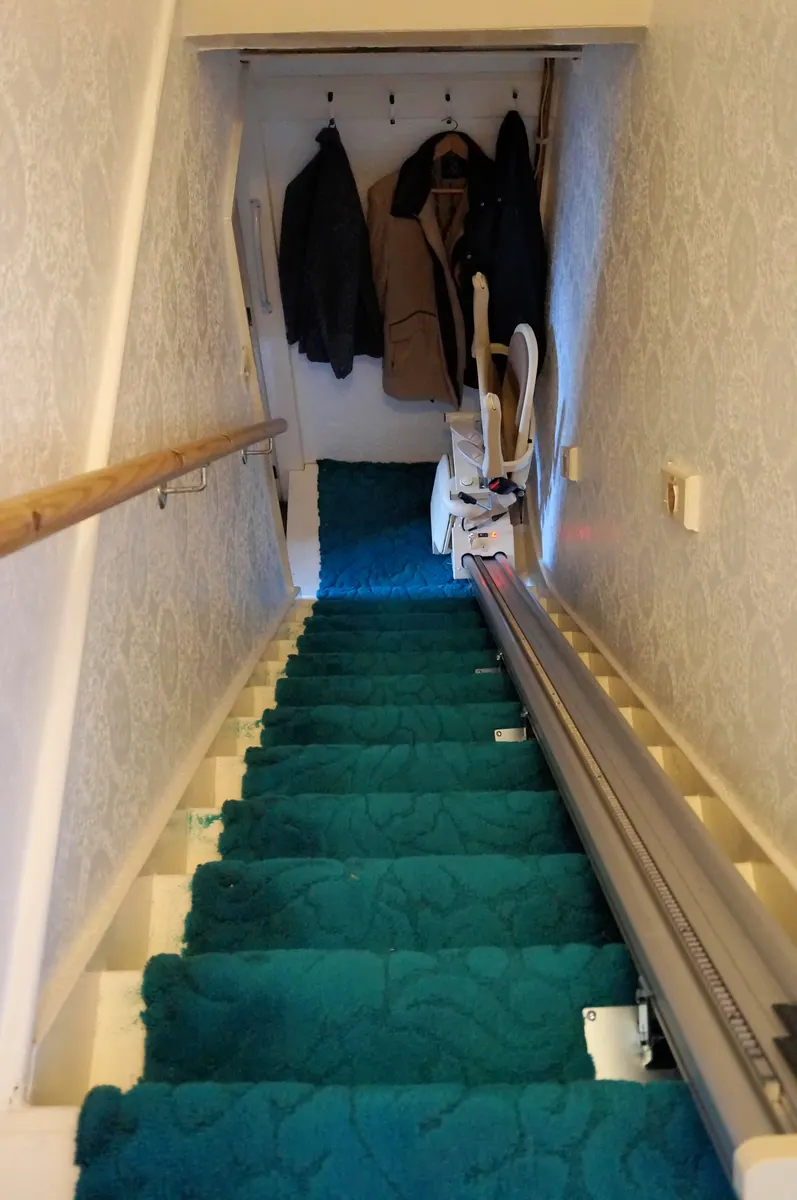
In England, Wales and Northern Ireland, the grant pays for adaptations an occupational therapist (OT) judges necessary, such as ramps, wider doors, a stairlift or a level access shower. The amount is means tested for adult applicants and councils can top it up from their own policies.
How much is a Disabled Facilities Grant in each UK nation?
| Nation | Scheme | Maximum | Means test | Who to contact |
|---|---|---|---|---|
| England | Disabled Facilities Grant | £30,000 (England Order 2008, article 2) | Yes for owners and tenants; not for disabled children or landlords | Local council |
| Wales | Disabled Facilities Grant | £36,000 (Wales Order 2008, article 2) | Removed for small and medium grants from April 2021 (Enable grant condition) | Local council |
| Scotland | Scheme of Assistance (no DFG) | No upper limit; grant is 80% of the approved cost, or 100% for people on certain benefits | 80% for everyone; 100% for people receiving the benefits listed in the 2008 Regulations | Local council social work services |
| Northern Ireland | Disabled Facilities Grant | £35,000, up to £70,000 in some cases (since 1 February 2023) | Yes, a contribution calculation | Health and Social Care Trust, then the Housing Executive |
The gov.uk DFG page still shows "Up to £25,000" for Northern Ireland. The Northern Ireland legislation has set £35,000 since February 2023, and nidirect gives the £35,000 figure.
Who qualifies for a Disabled Facilities Grant in England?
In England, the disabled person, or someone else in the household, must be disabled and "intend to live in the property during the grant period (usually 5 years but this can be shorter, for example, if the person is terminally ill)" (gov.uk eligibility). The application can come from the owner, a tenant or the landlord. The council must be satisfied that the work is "necessary and appropriate" for the disabled person's needs and "reasonable and can be done" given the age and condition of the property.
Councils must approve grants for the purposes listed in the Housing Grants, Construction and Regeneration Act 1996, section 23(1). They include access to and from the dwelling, making it safe, and access to the principal family room, a bedroom, and a room with a lavatory, bath or shower and washbasin. The list also covers cooking, heating, controls for power, light and heat, and movement around the home to care for another resident. gov.uk gives examples such as "widen doors and install ramps or grab rails" and a "stairlift, or level access shower."
A grant "will not affect any benefits you get."
How does the DFG means test work in England?
In England, the amount usually depends on household income and on "household savings over £6,000" (gov.uk). "Disabled children under 18 can get a grant without their parents' income being taken into account." Landlords also apply without a means test, although the council may ask that the property be let to another disabled person if the tenant moves within 5 years.
The DFG delivery guidance for local authorities (March 2022) explains the test. The household's assumed weekly needs are compared with actual income, and excess income is converted into a contribution using a "loan generation factor" (paragraphs B99 and B100). It is the income of the disabled person and their partner that counts, not the applicant's if that is someone else (B101). People already on means-tested benefits "can be passported through the means test" (paragraph 5.16). Where the eligible work costs more than £30,000, any contribution is deducted from the maximum grant, not from the cost of the work (B111).
Can a council pay more than £30,000?
Yes. Under the Regulatory Reform (Housing Assistance) (England and Wales) Order 2002, article 3, a housing authority "may provide ... assistance" to adapt or improve living accommodation. A council that publishes a Housing Assistance Policy can use this power to top up grants above £30,000 (delivery guidance, paragraphs B88 and B89), and can remove means testing for grants under a set amount.
As of October 2026, the government is reviewing the statutory limit. Its February 2026 consultation response says the "government has undertaken a review of the upper limit, and is currently considering the right approach for the future." It also notes that in 2023-24, children received 7% of DFGs but 43% of adaptations costing more than £30,000.
How do you apply for a Disabled Facilities Grant in England?
In England, applications go through the local council. gov.uk says the council "may send an occupational therapist or trained assessor" to assess what changes are needed, and "must give you a decision within 6 months." The work should then be completed within 12 months of approval, and "you might not get any grant if you start work on your property before the council approves your application."
Planning permission and building regulations approval are separate applications. The council may ask for an architect or surveyor, whose fees the grant can cover. Payment is made in instalments or on completion, sometimes direct to the contractor. An applicant who is unhappy can appeal to the council and then complain to the Local Government Ombudsman.

How is DFG funding changing in England?
England's DFG budget comes from the Department of Health and Social Care and is allocated by the Ministry of Housing, Communities and Local Government. The February 2026 consultation response confirmed £723 million for 2026-27, after a 2025-26 total of £761 million that included a £50 million in-year uplift. From 2026-27, allocations follow a new formula based on updated data, with children's numbers weighted by 1.25 to reflect higher costs. Transitional protection means "no local authority receives less funding than it received in June 2025."
In August 2026, the Department of Health and Social Care announced that it had written to councils asking them to speed up DFG processes for people with motor neurone disease and to waive "the Disabled Facilities Grant means test for people with MND."
What help is there in Wales, Scotland and Northern Ireland?
Wales. The DFG maximum is £36,000 under the Wales Order 2008, article 2. A Welsh Government written statement of 10 March 2021 said that "from April 2021" the means test would be removed from small and medium DFGs, and made this "a condition of the Enable grant." The statement covered small and medium grants only, and the position described here is as of the 2021 statement, so check the council's current policy. In March 2025, the Welsh Government reallocated £2.2 million to the DFG and set the 2025-26 capital budget for independent living programmes at £25 million.
Scotland. Councils must give a grant for essential adaptations, such as standard amenities for a disabled person, under the Housing (Scotland) Act 2006, section 73. The Scheme of Assistance Regulations 2008, regulation 4, set the grant at 100% where the applicant or their household receives income support, income-based jobseeker's allowance, guarantee credit or income-related employment and support allowance, and 80% otherwise. The Scottish Government's guide for homeowners (2011) says the assessment "will usually be carried out by an Occupational Therapist" and "there is no upper limit to the cost of the work, or for the amount of grant." Some councils top up the 80%, usually with a means test.
Northern Ireland. The Housing Executive pays DFGs. The Grant Limit Order, article 2, sets £35,000 and allows a further amount up to a total of £70,000 for some works. nidirect says to start with the local Health and Social Care Trust, and that only works recommended by an OT can be grant aided.
Is VAT charged on home adaptations?
Across the UK, VAT Notice 701/7 lets builders zero rate some work for a disabled person at their private residence:
- Ramps, doorways and passages: "constructing a ramp or widening an existing doorway or passage," but not a new doorway, lowering a threshold or building a driveway (paragraph 6.2).
- Bathrooms: providing, extending or adapting a bathroom, washroom or lavatory where "necessary to suit the condition of a disabled person," including a shower or wet room (paragraph 6.3).
- Lifts: "a stair lift or a chair lift designed for use in connection with a wheelchair" (paragraph 4.3).
For people aged 60 or over, the supply and installation of grab rails, ramps, stair lifts, bath lifts and built-in shower seats is charged at a reduced rate of VAT (section 9). The customer usually signs a declaration.
Are minor adaptations free?
In England, a council meeting assessed care needs must not charge for "community equipment (aids and minor adaptations)," and "an adaptation is minor if the cost of making the adaptation is £1,000 or less" (Care and Support (Charging and Assessment of Resources) Regulations 2014, regulation 3). The NHS lists grab rails and "a concrete ramp or steps" as typical examples.
Common questions
Can a tenant get a Disabled Facilities Grant?
Yes, in England a tenant can apply, as can an owner or a landlord. A tenant's application is means tested; a landlord's is not.
Does a DFG cover adaptations for a child?
Yes. In England, a grant for a disabled child under 18 is assessed without the parents' income. Children's adaptations are often larger: the government's 2026 data shows 43% of adaptations over £30,000 went to children.
Can work start before the grant is approved?
Not safely. In England, gov.uk warns that you might not get any grant if work starts before the council approves the application.
Sources
- The Disabled Facilities Grants (Maximum Amounts and Additional Purposes) (England) Order 2008, article 2.
- The Disabled Facilities Grants (Maximum Amounts and Additional Purposes) (Wales) Order 2008, article 2.
- Housing Grants, Construction and Regeneration Act 1996, section 23(1).
- The Regulatory Reform (Housing Assistance) (England and Wales) Order 2002, article 3.
- GOV.UK. Disabled Facilities Grants: overview, eligibility, what you'll get, how to apply. Checked October 2026.
- GOV.UK. Disabled Facilities Grant (DFG) delivery: guidance for local authorities in England, March 2022, paragraphs 5.16 and B88 to B111.
- MHCLG. Changing the way government allocates Disabled Facilities Grant funding: consultation response, 17 February 2026.
- DHSC. Patients with motor neurone disease set for fast-tracked care, 5 August 2026.
- Welsh Government. Written Statement: Removing the means test on small and medium Disabled Facilities Grants, 10 March 2021, and £2.2m boost to empower independent living, 14 March 2025.
- Housing (Scotland) Act 2006, section 73, and Scheme of Assistance Regulations 2008, regulation 4.
- Scottish Government. Funding adaptations to the home: a guide for homeowners, 2011.
- The Housing Renovation etc. Grants (Grant Limit) Order (Northern Ireland) 2003, article 2, as amended in 2023, and nidirect, Disabled facilities grants. Checked October 2026.
- HMRC. Reliefs from VAT for disabled and older people (VAT Notice 701/7), paragraphs 4.3, 6.2, 6.3 and section 9.
- The Care and Support (Charging and Assessment of Resources) Regulations 2014, regulation 3, and NHS, Home adaptations.
Spotted an error? Read our corrections policy.
Cite as: Home Adapt Guide Team. (2026, October 15). Disabled Facilities Grant: how much, who qualifies and how to apply in each UK nation. Home Adapt Guide. https://homeadaptguide.com/funding/disabled-facilities-grant-uk/