This guide covers Canada.
On this page
- Who can claim the Home Accessibility Tax Credit?
- Which homes and renovations qualify?
- What expenses can and cannot be claimed under the HATC?
- Can the same expense be claimed for the HATC and the medical expense credit?
- Which home adaptation items count as medical expenses?
- How does the Multigenerational Home Renovation Tax Credit work?
- How do the three credits compare?
- How much is the HATC worth?
- Common questions
- Sources
The federal Home Accessibility Tax Credit (HATC) lets a Canadian homeowner claim up to $20,000 a year of eligible home accessibility expenses on line 31285 of the federal return, for a person who is 65 or older or eligible for the disability tax credit. The credit is calculated at the lowest federal tax rate, which is 14% for 2026, so the most it can be worth is $2,800 a year.
From the 2026 tax year, an expense claimed under the medical expense tax credit (METC) can no longer also be claimed under the HATC. Budget 2025 proposed the change, and it became law when the Budget 2025 Implementation Act, No. 1 received royal assent on March 26, 2026. Families and occupational therapists now have to choose which credit each home adaptation expense goes on.
Who can claim the Home Accessibility Tax Credit?
The HATC is built around a "qualifying individual": a person who is 65 or older at the end of the year, or who is eligible for the disability tax credit at any time in the year. That person can claim for their own home. An "eligible individual" can also claim for a qualifying individual. The CRA lists the spouse or common-law partner; a relative (parent, grandparent, child, grandchild, sibling, aunt, uncle, nephew or niece) who claimed, or could have claimed, the eligible dependant amount or a Canada caregiver amount for them; and otherwise a person entitled to claim the disability amount for them.
Where a home has more than one qualifying individual, the total eligible expenses for that dwelling cannot exceed $20,000 for the year. The people entitled to claim can split the amount between them, and the CRA decides the split if they cannot agree.
Which homes and renovations qualify?
The HATC applies to an "eligible dwelling": a housing unit in Canada owned (alone or jointly) by the qualifying individual and ordinarily lived in by them, or owned by an eligible individual and lived in by both that person and the qualifying individual. The CRA says a qualifying individual can have only one eligible dwelling at a time. Co-operative housing shares and up to half a hectare of land around the home are generally included. A tenant who does not own the home cannot use the HATC.
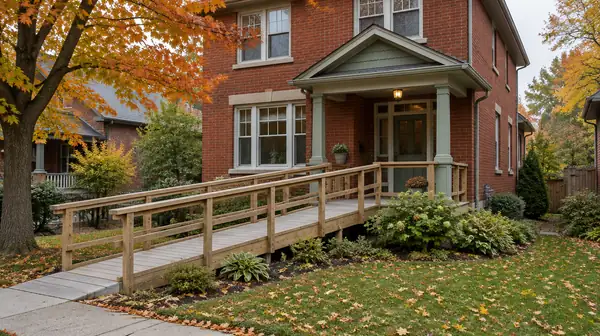
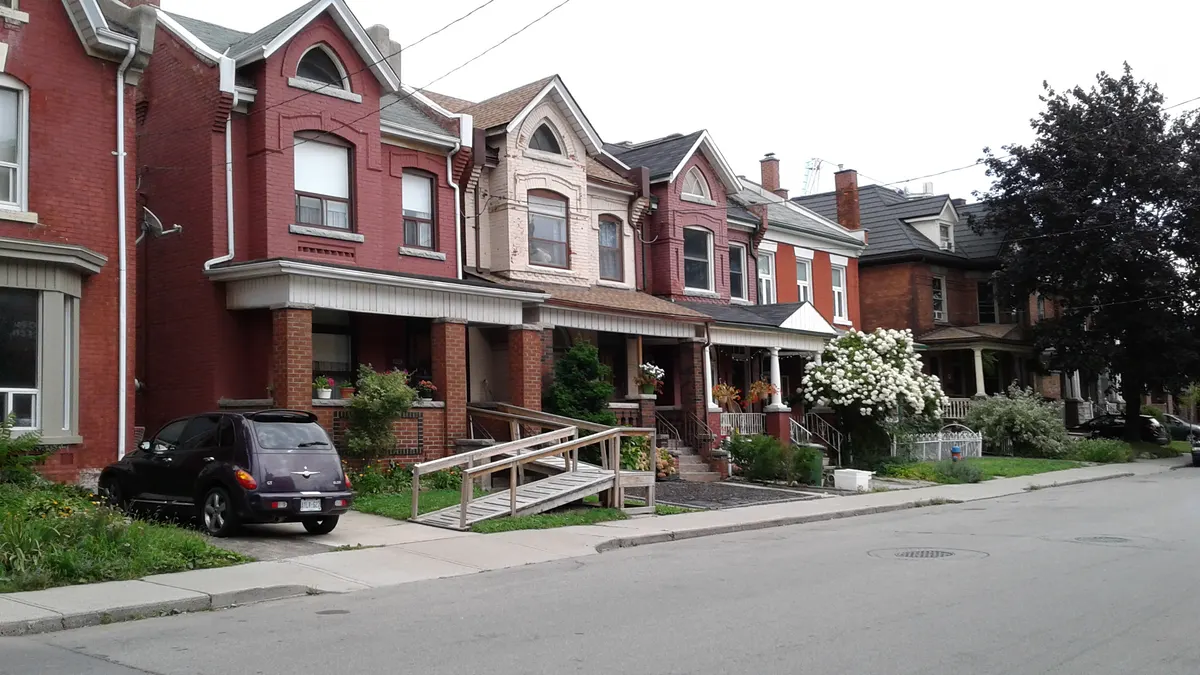
The work must be a "qualifying renovation": a renovation or alteration that is "of an enduring nature and is integral to the eligible dwelling," and that either lets the qualifying individual get into, move around or function in the home, or reduces their risk of harm in the home or getting into it (Income Tax Act, subsection 118.041(1)). The CRA's own example is "a ramp or handrails." Items that will not become a permanent part of the home are generally not eligible. For ramp design rules, see wheelchair ramp requirements in Canada.
What expenses can and cannot be claimed under the HATC?
The CRA accepts building materials, fixtures, equipment rentals, building plans, permits and work by licensed tradespeople such as electricians, plumbers, carpenters and architects. Expenses must be for work performed and goods acquired in the tax year.
The CRA and subsection 118.041(1) exclude property that can be used independently of the renovation, routine repairs and maintenance, household appliances, home-entertainment electronics, housekeeping, security monitoring, gardening and outdoor maintenance, financing costs, and work mainly meant to increase or keep the home's value. Also excluded are costs of earning business or rental income, goods or services from a family member or other non-arm's-length person who is not registered for GST/HST, amounts reimbursed by anyone other than a government program and, from 2026, any amount included in a medical expense claim.
The value of a homeowner's own labour and tools cannot be claimed. Government grants do not reduce the HATC, and a reasonable vendor or manufacturer rebate generally does not either. A condo or co-op owner can claim their share of eligible common-area work with a signed statement from the corporation.
Can the same expense be claimed for the HATC and the medical expense credit?
For 2025 and earlier years, yes. The CRA's line 31285 page states that if an eligible expense also qualifies as a medical expense, "you can claim the expense as a medical expense and a home accessibility expense."
For the 2026 tax year and later, no. Budget 2025, tabled on November 4, 2025, proposed that "an expense claimed under the Medical Expense Tax Credit cannot also be claimed under the Home Accessibility Tax Credit." Section 42 of the Budget 2025 Implementation Act, No. 1 (S.C. 2026, c. 3) enacted it from January 1, 2026, adding paragraph (k) to "qualifying expenditure" in section 118.041: an expense "included in computing a deduction under section 118.2 for any taxpayer for any taxation year" does not qualify.
The words "for any taxpayer" matter for families: if an adult child includes a stair lift in a medical expense claim for a parent, nobody can claim that stair lift under the HATC. As of October 2026, the CRA's line 31285 page still shows the 2025 rule; its Budget 2025 page describes the change.
Which home adaptation items count as medical expenses?
The CRA's details of medical expenses (lines 33099 and 33199) lists these home-related items:
- Renovation or construction: changes that give a person "access to (or greater mobility or functioning within) their home" because they have a severe and prolonged mobility impairment or lack normal physical development. The changes must not normally be expected to increase the home's value, and must not normally be incurred by people without the impairment. CRA examples are ramps "if the person cannot use stairs", wider halls and doorways, and lowered kitchen or bathroom cabinets.
- Driveway access: reasonable amounts to alter the driveway of the main residence of a person with a severe and prolonged mobility impairment, to ease access to a bus.
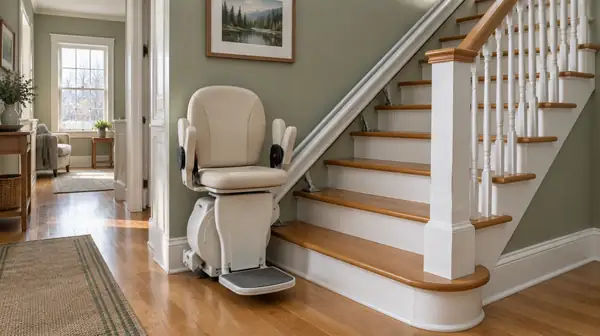
- Stair chair: a "power-operated guided chair to be used in a stairway, including installation", with a prescription.
- Lifts: power-operated equipment designed only for a person with a disability to reach different areas of a building, with a prescription.
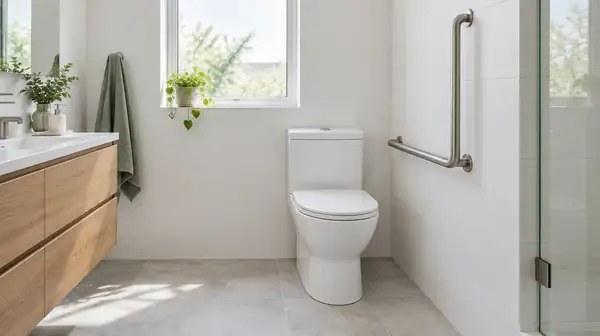
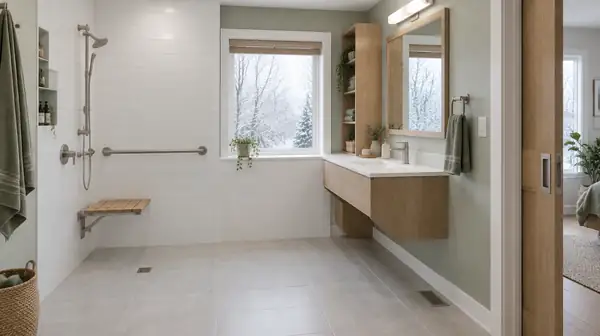
- Bathroom aids: aids to get in or out of a tub or shower or on or off a toilet, with a prescription.
Only medical expenses above a threshold count. For 2025, the threshold was the lesser of $2,834 and 3% of net income, and expenses can be claimed for any 12-month period ending in the year.
How does the Multigenerational Home Renovation Tax Credit work?
The Multigenerational Home Renovation Tax Credit (MHRTC, line 45355) is a refundable credit for the cost of creating a secondary unit so a senior or a disabled adult can live with a relative. For 2025, the CRA states it was "14.5% of your costs, up to a maximum of $7,250," on up to $50,000 of qualifying expenditures per completed renovation.
The Income Tax Act sets the MHRTC at the "appropriate percentage" of up to $50,000 (subsection 122.92(3)), which is the lowest federal rate, 14% for 2026. That puts the 2026 maximum at $7,000. As of October 2026, the CRA has not yet posted the 2026 figures.
The CRA's conditions are:
- The qualifying individual is 65 or older at the end of the year the renovation ends, or is 18 to 64 and eligible for the disability tax credit in that year.
- The secondary unit is "a self-contained housing unit with a private entrance, kitchen, bathroom and sleeping area," created within the home or on the property.
- The home is in Canada, owned by the qualifying individual or a relative aged 18 or older, and lived in by both, or they intend to live there within 12 months of the end of the renovation.
- Only one renovation can be claimed per qualifying individual in their lifetime.
- The claim is made for the year the renovation ends, on Schedule 12.
The CRA's MHRTC claim page says an expense in a MHRTC claim cannot also be claimed for the METC or the HATC.
How do the three credits compare?
| HATC | Medical expense tax credit | MHRTC | |
|---|---|---|---|
| Who it is for | Person 65+ or eligible for the DTC, in a home they or an eligible individual own | A taxpayer with eligible medical expenses | Person 65+, or 18 to 64 and eligible for the DTC, living with a relative |
| What it covers | Permanent renovations for access, mobility, function or safety | Listed medical items, including accessibility renovations and some equipment | Creating a self-contained secondary unit |
| Limit | $20,000 of expenses a year per dwelling | Expenses above the lesser of $2,834 and 3% of net income (2025) | $50,000 of expenses per renovation, once per person in a lifetime |
| Federal rate | 14% (2026); 14.5% (2025) | 14% (2026); 14.5% (2025) | 14% (2026); 14.5% (2025) |
| Maximum credit | $2,800 (2026) | Depends on expenses and income | $7,000 (2026); $7,250 (2025) |
| Refundable | No | No | Yes |
| Where to claim | Line 31285 | Lines 33099 and 33199 | Line 45355, Schedule 12 |
| Same expense on another credit | Not if claimed under the METC (from 2026) | Not if claimed under the MHRTC | Not under the METC or HATC |
The 14% rate for 2026 comes from paragraph 117(2)(a) of the Income Tax Act and the Department of Finance, which states that most non-refundable credits are "legislatively based on the lowest personal income tax rate (14 per cent in 2026)."
How much is the HATC worth?
A 72-year-old homeowner pays a licensed contractor $12,000 in 2026 to build an exterior ramp and install handrails. Nobody claims the cost as a medical expense.
- HATC: $12,000 x 14% = $1,680 off federal tax for 2026.
- If the same work had been $25,000, only $20,000 counts: $20,000 x 14% = $2,800.
If the homeowner instead had net income of $40,000 and claimed the $12,000 under the METC, 3% of net income is $1,200. Using 3% as the threshold (it was the lower figure in 2025, against $2,834), the METC would be ($12,000 minus $1,200) x 14% = $1,512. Here the HATC gives more. The result changes with income, other medical expenses and home ownership, so compare both before filing. Both are non-refundable and only help someone who owes federal tax.
Common questions
Is a stair lift eligible for the Home Accessibility Tax Credit?
The CRA's HATC page does not list stair lifts by name. The test is whether the work is a permanent, integral alteration that helps the person get around the home or reduces their risk of harm, and the CRA says items that do not become a permanent part of the home are generally not eligible. A powered stair chair, including installation, is listed as a medical expense with a prescription. From 2026, it can go on one credit or the other, not both. For the programs that can pay toward a stair lift in Ontario before tax time, see stair lift funding in Ontario.
Can a renter claim the HATC?
No. The eligible dwelling must be owned by the qualifying individual or by an eligible individual living there with them. The CRA's medical expense rules for renovations refer to the person's home and do not mention ownership, so a renter may be able to claim qualifying renovation costs as medical expenses if those rules are met.
Does Ontario still have the Seniors' Home Safety Tax Credit?
No. Ontario describes it as a "temporary Ontario Seniors' Home Safety Tax Credit for the 2021 and 2022 tax year," and its old ontario.ca page now redirects to the Ontario archive. Ontario now offers the Ontario Seniors Care at Home Tax Credit, a refundable credit for people 70 or older of "up to 25% of claimable medical expenses up to $6,000, for a maximum credit of $1,500," reduced by 5% of family net income over $35,000. It uses the same expenses as the Ontario medical expense credit and is claimed on Form ON479.
What records should we keep?
Keep, but do not file, invoices and receipts showing the vendor's name and GST/HST number where applicable, the goods or work, the dates, the address of the work, the amount and proof of payment.
Sources
- Canada Revenue Agency. Line 31285: Home accessibility expenses, tax year 2025, page dated July 24, 2026. Checked October 2026.
- Government of Canada. Income Tax Act, section 118.041, subsections (1) and (3); section 122.92, subsection (3); section 117, paragraph (2)(a). Current to September 21, 2026.
- Government of Canada. Budget 2025 Implementation Act, No. 1, S.C. 2026, c. 3, section 42, assented to March 26, 2026.
- Department of Finance Canada. Budget 2025, Tax measures: Supplementary information, "Home Accessibility Tax Credit."
- Canada Revenue Agency. Budget 2025: CRA information on select measures. Checked October 2026.
- Department of Finance Canada. Report on the impact of reducing the lowest marginal personal income tax rate on non-refundable tax credits.
- Canada Revenue Agency. Lines 33099 and 33199: Eligible medical expenses and Details of medical expenses. Checked October 2026.
- Canada Revenue Agency. Multigenerational home renovation tax credit (line 45355), Who can claim and How to claim, tax year 2025. Checked October 2026.
- Government of Ontario. Ontario Seniors Care at Home Tax Credit, updated June 26, 2025. Checked October 2026.
Spotted an error? Read our corrections policy.
Cite as: Home Adapt Guide Team. (2026, October 15). Home Accessibility Tax Credit 2026: HATC, METC and MHRTC compared. Home Adapt Guide. https://homeadaptguide.com/funding/home-accessibility-tax-credit/