This guide covers Ontario, Canada.
On this page
- Does OHIP cover stair lifts in Ontario?
- Does the Assistive Devices Program pay for a stair lift?
- Can the Home and Vehicle Modification Program pay for a stair lift?
- Can Ontario Renovates help pay for a stair lift?
- What if the injury came from work, a car accident or military service?
- Which tax credits apply to a stair lift in Ontario?
- Where does Ontario Health atHome fit in?
- What does each Ontario program pay for?
- Common questions
- Sources
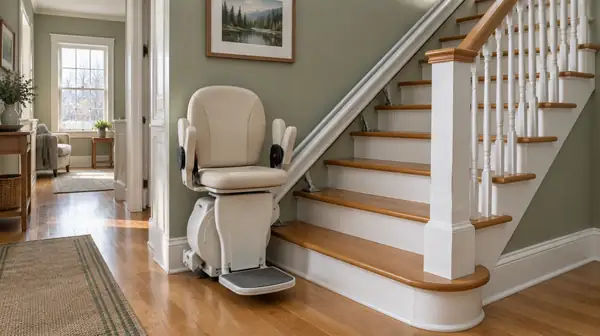
Ontario's Assistive Devices Program (ADP) lists "stair lifts" among the equipment it does not cover, and no OHIP-funded program lists stair lifts as a covered item. The main provincial source of stair lift funding is the Home and Vehicle Modification Program, delivered by March of Dimes Canada, which lists "stairway lifts" as an eligible home modification.
Other money comes from local Ontario Renovates grants, WSIB for work injuries, auto insurance accident benefits, Veterans Affairs Canada and two federal tax credits. Several of them need written approval before work starts, so apply before the client signs a quote.
Does OHIP cover stair lifts in Ontario?
No. The Ontario government's page on what OHIP covers lists physician, hospital, laboratory, optometry, podiatry and ambulance services, and does not mention stair lifts, home modifications or assistive devices. The province's program for equipment is the ADP, and it excludes stair lifts by name.
Does the Assistive Devices Program pay for a stair lift?
No. The ADP helps Ontario residents with a long-term physical disability pay for "customized equipment, like wheelchairs and hearing aids." To qualify, a person generally needs a valid Ontario health card, a physical disability requiring the equipment for 6 months or longer, and to meet the clinical criteria for the device. The ADP does "not consider your income."
For fixed-price equipment, "ADP will pay 75% of the approved price" and the client pays the remaining 25%. People receiving Ontario Works, ODSP or Assistance for Children with Severe Disabilities can have up to 100% paid.
The ADP's list of equipment it does not cover is explicit. As of October 2026 it includes:
- "stair lifts"
- "chair lifts, or any lifting devices"
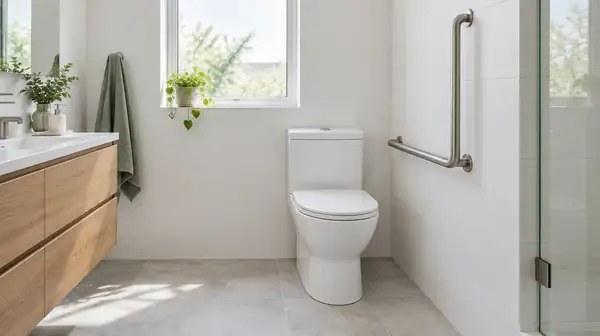
- "grab-bars"
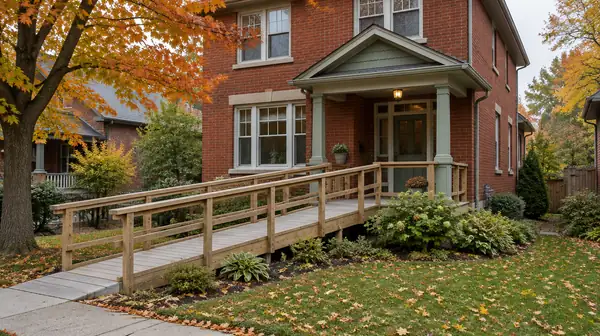
- "home renovations (including ramps, porch lifts, etc.)"
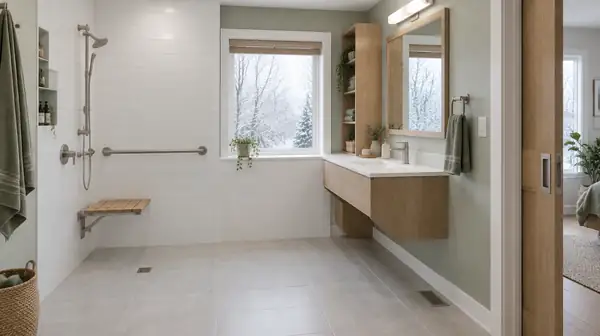
- "bath and shower aids (for example, benches, chairs, bath lifts)"
The ADP can still help with listed equipment such as a wheelchair. The lift itself has to come from another source.
Can the Home and Vehicle Modification Program pay for a stair lift?
Yes. The Ontario government's Home and Vehicle Modification Program page, updated September 1, 2026, lists "inside and outside platform lifts, stairway lifts and lifting/ transferring devices, including necessary structural changes" as eligible home modifications. The Ministry for Seniors and Accessibility publishes the program page, and applications go through March of Dimes Canada.
To apply, a person must be a permanent Ontario resident and have a disability that impedes mobility and results in "substantial restriction in activities of daily living." The program is a funder of last resort: applicants "must first access any other sources of available public or private funding before being considered eligible." As of October 2026, applicants with a household income of over $38,000 "may be required to contribute towards the cost."
Program funding can cover the assessment completed after the application, design and professional fees, the equipment and its warranty, installation and structural work, and training on the equipment. The service coordinator decides eligibility and approves spending, and can assess the home if more information is needed.
The ontario.ca page does not state a dollar maximum. March of Dimes publishes the current limits and the application forms on its program site, so confirm the amount there before quoting a client.
Can Ontario Renovates help pay for a stair lift?
Sometimes. Ontario Renovates is a component of the provincial Ontario Priorities Housing Initiative, and its Home Repair sub-component helps "low and moderate-income homeowner households to increase accessibility of their home through modifications and adaptations." Municipal service managers run it, so the amount, income limits, eligible items and intake dates differ from one area to the next. Check with the service manager for the client's city, county or district.
In London and Middlesex County, the City of London offers "a one-time 10-year forgivable loan up to $25,000 for home repairs and/or accessibility modifications," and the first $5,000 for accessibility work is a grant. As of October 2026, applicants must be 60 or older or have a disability, with household income at or below $95,000, liquid assets at or below $30,000 and a property tax assessment at or below $320,000. The city lists "chair and bath lifts" as eligible, excludes "therapeutic equipment," and states that work "started before receiving written approval" is not eligible. The 2026 intake closes October 30, 2026.
Because London's list names chair lifts rather than stair lifts, a contractor should confirm in writing that the specific product qualifies before the client signs a quote.
What if the injury came from work, a car accident or military service?
Where a work injury, a car accident or military service caused the disability, that payer's rules affect the other programs. The ADP, for example, excludes people who already receive WSIB support for the same equipment, and Group "A" veterans who receive it from Veterans Affairs Canada.
WSIB. The WSIB Home Modifications policy (17-06-08), which applies to decisions made on or after September 21, 2026, covers modifications where a work-related injury or illness affects the worker's access to areas of their principal residence. It classes "installing elevators or platform lifts" as major modifications and does not name stair lifts, so the case manager decides how a stair lift is treated.
Auto insurance. Under Ontario's Statutory Accident Benefits Schedule, O. Reg. 34/10, rehabilitation benefits can pay for "home modifications and home devices" to accommodate an injured person (clause 16(3)(i)). They do not pay for renovations that only give access to areas "not needed for ordinary living" (clause 16(4)(b)). Medical, rehabilitation and attendant care benefits share one limit of $65,000 per accident, or $1,000,000 for a catastrophic impairment, for accidents on or after June 3, 2019, unless optional benefits change it (subsection 18(3)).
Veterans Affairs Canada. The Veterans Independence Program can fund home adaptations such as a "stair glide," which "must be pre-authorized by VAC, based on estimates obtained by the eligible individual."
Which tax credits apply to a stair lift in Ontario?
Two federal credits apply to Ontario taxpayers. The CRA's list of eligible medical expenses includes a "power-operated guided chair to be used in a stairway, including installation," with a prescription needed.
The Home Accessibility Tax Credit lets a person who is 65 or older, or eligible for the disability tax credit, claim up to $20,000 a year in eligible renovation expenses (line 31285). From the 2026 tax year, the same expense can no longer be claimed under both credits: the Budget 2025 Implementation Act, No. 1 added that exclusion to section 118.041 of the Income Tax Act, in force January 1, 2026. Claim each expense under whichever credit gives the larger amount.
Where does Ontario Health atHome fit in?
Ontario Health atHome arranges publicly funded home care, including occupational therapy to "help to make day-to-day activities easier and make it easier to move around in your home," according to the Ontario government's home and community care page. That page does not list stair lifts or home modifications as a home care service. A care coordinator can still arrange the OT visit whose recommendation supports an application to March of Dimes, WSIB or an insurer. People can call 1-833-515-1234 to start.
What does each Ontario program pay for?
| Program | What it can pay for | Limit | Who applies |
|---|---|---|---|
| Assistive Devices Program | Listed equipment such as wheelchairs. Stair lifts, lifting devices and home renovations are excluded | 75% of the approved price for fixed-price items | Ontario resident with a valid health card and a disability lasting 6 months or longer |
| Home and Vehicle Modification Program | Stairway lifts, platform lifts and lifting devices, with structural changes, assessment, installation and training | Contribution may be required above $38,000 household income; dollar limits set by the program | Ontario resident with a mobility disability, through March of Dimes Canada |
| Ontario Renovates, London and Middlesex | Accessibility modifications, including chair and bath lifts | First $5,000 as a grant, up to $25,000 as a 10-year forgivable loan | Homeowners 60 or older or with a disability, income at or below $95,000 |
| WSIB | Home modifications, including platform lifts and elevators as major modifications | Set case by case under policy 17-06-08 | Worker whose work injury affects access to their home |
| Auto insurance accident benefits | Home modifications and home devices | Shared $65,000 limit, or $1,000,000 if catastrophic | Person injured in a vehicle accident, through their insurer |
| Veterans Independence Program | Home adaptations such as a stair glide | Pre-authorization required | Eligible veterans; not caregivers or survivors |
| Medical expense tax credit | Power-operated stairway chair and installation, with a prescription | Expenses above a threshold of 3% of net income or a set dollar amount, whichever is less | Taxpayer, on the income tax return |
| Home Accessibility Tax Credit | Eligible renovation expenses | $20,000 of expenses a year | Person 65 or older or eligible for the disability tax credit |
Common questions
Does OHIP pay anything toward a stair lift?
No. OHIP pays for physician, hospital and some other health services, not home equipment. The ADP, which covers equipment in Ontario, lists "stair lifts" among the items it does not cover.
Can a client combine funding programs for one stair lift in Ontario?
Yes, within each program's rules. The Home and Vehicle Modification Program requires applicants to use other public or private funding first, and the ADP excludes people already receiving WSIB support for the same equipment. Tax credits are claimed after the work is paid for, and from 2026 one expense cannot be claimed under both the medical expense credit and the Home Accessibility Tax Credit.
Should the lift be installed before funding is approved?
No. The City of London's Ontario Renovates program refuses work started before written approval, and Veterans Affairs Canada requires pre-authorization based on estimates. Get written approval from every funder before the client signs a purchase agreement.
Does a ramp make more sense than a stair lift?
It depends on the client's mobility and the site. A stair lift needs the user to transfer to a seat, while a ramp or platform lift does not. For ramp slopes and widths, see wheelchair ramp requirements in Canada.
Sources
- Government of Ontario. Assistive Devices Program, sections "Who qualifies", "How much is covered" and "Types of equipment and supplies not covered", updated March 26, 2026. Checked October 2026.
- Government of Ontario. What OHIP covers. Checked October 2026.
- Government of Ontario, Ministry for Seniors and Accessibility. Home and Vehicle Modification Program, sections "About the program", "Eligibility", "Program features" and "Home modifications", updated September 1, 2026. Checked October 2026.
- Government of Ontario. Ontario's Third Action Plan under the National Housing Strategy (2025 to 2028): NHS programs, Ontario Priorities Housing Initiative, updated May 9, 2025.
- City of London. Home repair and accessibility funding (Ontario Renovates). Checked October 2026.
- Workplace Safety and Insurance Board. Operational Policy 17-06-08, Home Modifications, applies to decisions on or after September 21, 2026.
- Government of Ontario. O. Reg. 34/10, Statutory Accident Benefits Schedule, clauses 16(3)(i) and 16(4)(b) and subsection 18(3), consolidated from July 1, 2026.
- Veterans Affairs Canada. Veterans Independence Program: Benefits at Home Policy, home adaptations, paragraphs 94 to 115.
- Canada Revenue Agency. Details of medical expenses, lines 33099 and 33199. Checked October 2026.
- Canada Revenue Agency. Line 31285, Home accessibility expenses. Checked October 2026.
- Government of Ontario. Home and community care, updated May 5, 2026.
Spotted an error? Read our corrections policy.
Cite as: Home Adapt Guide Team. (2026, October 15). Stair lift funding in Ontario: what OHIP, ADP and other programs pay for. Home Adapt Guide. https://homeadaptguide.com/funding/stair-lift-funding-ontario/